Part of our creatine comes from food, and almost only from animal products. So when you are vegetarian or vegan, you get very little of it from your plate.
Where is creatine found?
The body makes some of it itself, from amino acids. The rest comes from food: mainly red meat and fish. Fruit, vegetables, grains and pulses contain practically none.
Someone who eats neither meat nor fish therefore relies almost entirely on what their own body produces. Several studies have also observed lower muscle creatine stores in vegetarians.
What creatine can do
The effect recognised in Europe is the same for everyone: creatine increases physical performance in successive bursts of short-term, high-intensity exercise, with a daily intake of 3 g.
Is creatine vegan?
The creatine monohydrate used in supplements is made by synthesis, with no animal ingredients. The catch is elsewhere, in the format:
- Gummies are often made with animal gelatine (pork or beef).
- Capsules can also be made of gelatine.
Check the ingredient list: look for pectin or agar rather than gelatine, and a vegan label.
Our choice
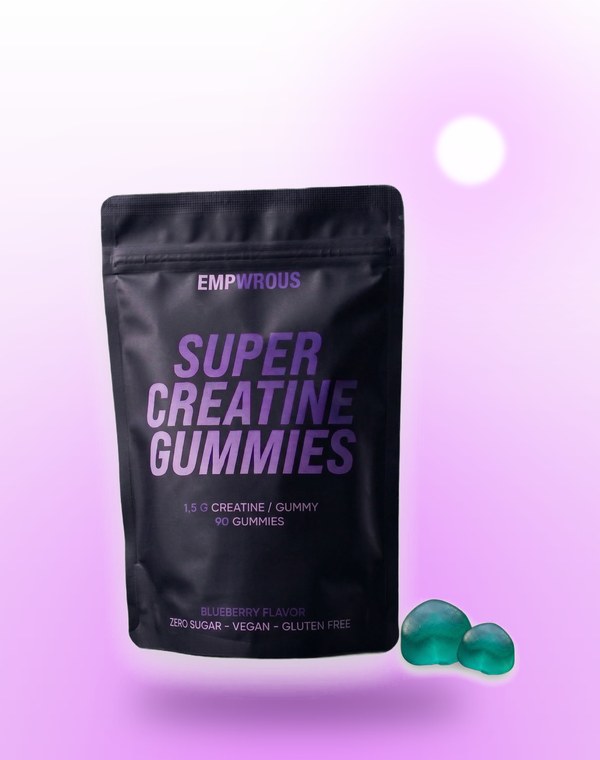
We ruled out animal gelatine from the start. Our Super Creatine Gummies are made with pectin, which comes from fruit. It is more expensive and harder to stabilise, but it is what makes them vegan. They contain 0 g of sugar, and 2 gummies provide 3 g of creatine.
Key points
- A vegetarian or vegan diet provides very little creatine.
- The reference dose in Europe is 3 g a day.
- For a vegan product, check that it contains no gelatine.
Food supplement. Do not exceed the recommended daily dose. Not a substitute for a varied and balanced diet and a healthy lifestyle.